
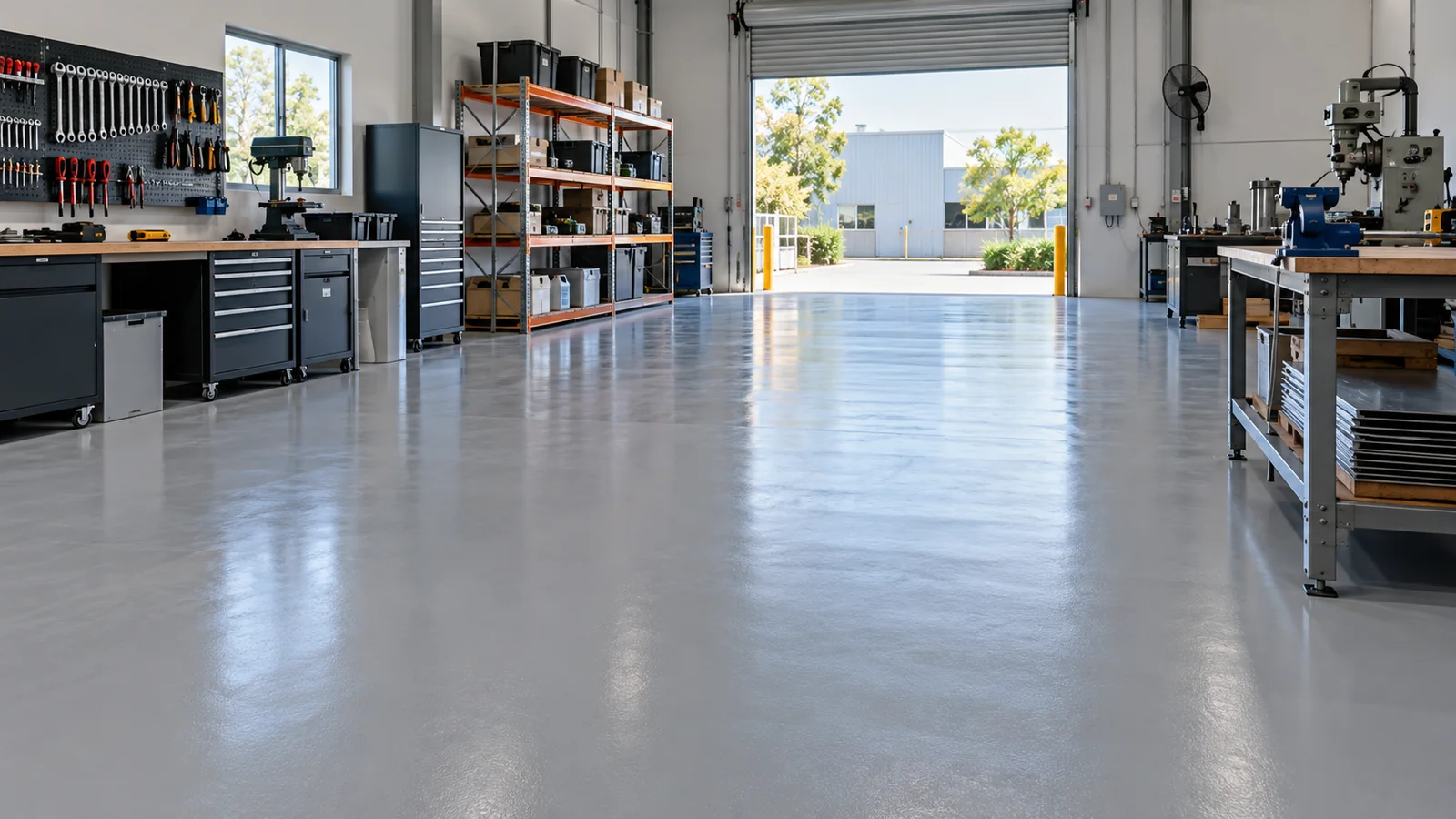
A good commercial floor rarely draws attention to itself. Staff move through the space, stock comes and goes, customers walk in and cleaning happens at the end of the day. It is only when the surface starts dusting, staining, peeling or becoming difficult to keep clean that everyone notices how much work the floor has been doing.
For Brisbane business owners, facility managers and builders, Commercial Epoxy Flooring in Brisbane can be a practical way to turn sound concrete into a more finished, maintainable working surface. But the best result is not simply the glossiest coating. It is the system that suits the building, the people using it and the way the business operates. That means asking useful questions before choosing a colour, thickness or finish. Browse our epoxy flooring colours to explore appearance options.
What is commercial epoxy flooring?
Commercial epoxy flooring is a resin-based coating system installed over suitably prepared concrete. Depending on the specified system, it can form a hard-wearing, relatively seamless finish that is easier to sweep and clean than untreated, dusty concrete. Different build-ups and surface textures can be selected for particular wear, chemical exposure, appearance and slip-resistance requirements.
The word epoxy describes a family of systems, not one universal product. A basic finish for a storeroom may not be suitable for an automotive workshop, a busy loading area or a food-handling space. The concrete underneath still carries the structural loads; the coating protects and finishes the surface rather than turning a damaged slab into a new engineered floor.
That distinction matters. If somebody tells you that any epoxy is automatically forklift-proof, chemical-proof or compliant with every workplace requirement, it is worth asking what product, preparation and performance evidence sits behind the claim.
Start with how the floor will be used
Picture three Brisbane properties. A retail showroom wants an attractive surface that can be cleaned quickly without distracting from its merchandise. A mechanical workshop needs to think about oils, tyre traffic and regular washing. A small distribution warehouse has pallet jacks, loading movements and hard-wheeled equipment. All three might benefit from an epoxy coating, but their priorities are different.
For a showroom, presentation and smooth day-to-day maintenance may lead the discussion. In a workshop, spill exposure, cleaning chemicals and surface grip can be more important. For a warehouse, traffic routes, wheel contact, the condition of joints and the schedule for shutting down sections of the floor must be considered. The right choice begins with a conversation about use rather than a catalogue of decorative finishes. Explore our warehouse and workshop epoxy flooring options for these working environments.
Commercial projects can also include back-of-house areas, light industrial work bays, storage rooms and suitable service corridors. In areas used for food handling, flooring selection has an extra layer of responsibilities: Food Standards Australia New Zealand's Safe Food Australia guide explains requirements for premises and surfaces that can be effectively cleaned. Epoxy is not automatically an approved food-premises solution; the entire specified floor and its installation need to suit the activity and relevant requirements.
Durability means matching the coating to the demands
The most useful performance question is not simply, “How long will it last?” It is, “What will it be asked to withstand?” Foot traffic differs from frequent wheeled traffic. Occasional water splashes differ from repeated exposure to degreasers, oils or aggressive chemicals. A glossy finish in a display area has different priorities from a textured finish beside a wash-down bay.
Commercial epoxy coatings can provide resistance to everyday scuffs, surface wear and selected substances, but those benefits depend on the actual product specification, thickness, preparation and maintenance. Manufacturers publish different limits for their systems. For example, an Australian resin-flooring technical specification from Sika illustrates why substrate condition, moisture and temperature must be considered together. It is a technical example, not a claim that Conch uses that product.
For workshops and larger commercial spaces, the floor should be reviewed alongside its working environment: turning wheels, dropped tools, wheeled bins, standing water, cleaning routines and the edges of existing movement joints. If a coating does not match those conditions, the lowest initial quote may become an expensive interruption later.
Slip resistance deserves its own conversation
People often assume that a shiny surface must be slippery or that a rough finish must be safe. Neither is a reliable rule. The right level of grip depends on contaminants, footwear, walking patterns, cleaning methods, slopes and the activities taking place. A highly textured finish may offer extra grip in particular conditions but can take more effort to clean.
WorkSafe Queensland's guidance on floor and ground surfaces is clear that there is no single safe slip-resistance level for every workplace. A business should assess its actual hazards. Where a project calls for a particular slip classification, the specification and supporting evidence should be checked; AS 4586 is an Australian standard addressing the classification of new pedestrian surface materials.
For a Brisbane workshop that gets wet around a wash bay, or a stock room where liquids are occasionally carried, discuss where extra texture is needed rather than assuming every square metre should have the same finish. Flooring is one control within a broader approach that also includes spill response, housekeeping and appropriate footwear.
Why the concrete beneath matters so much
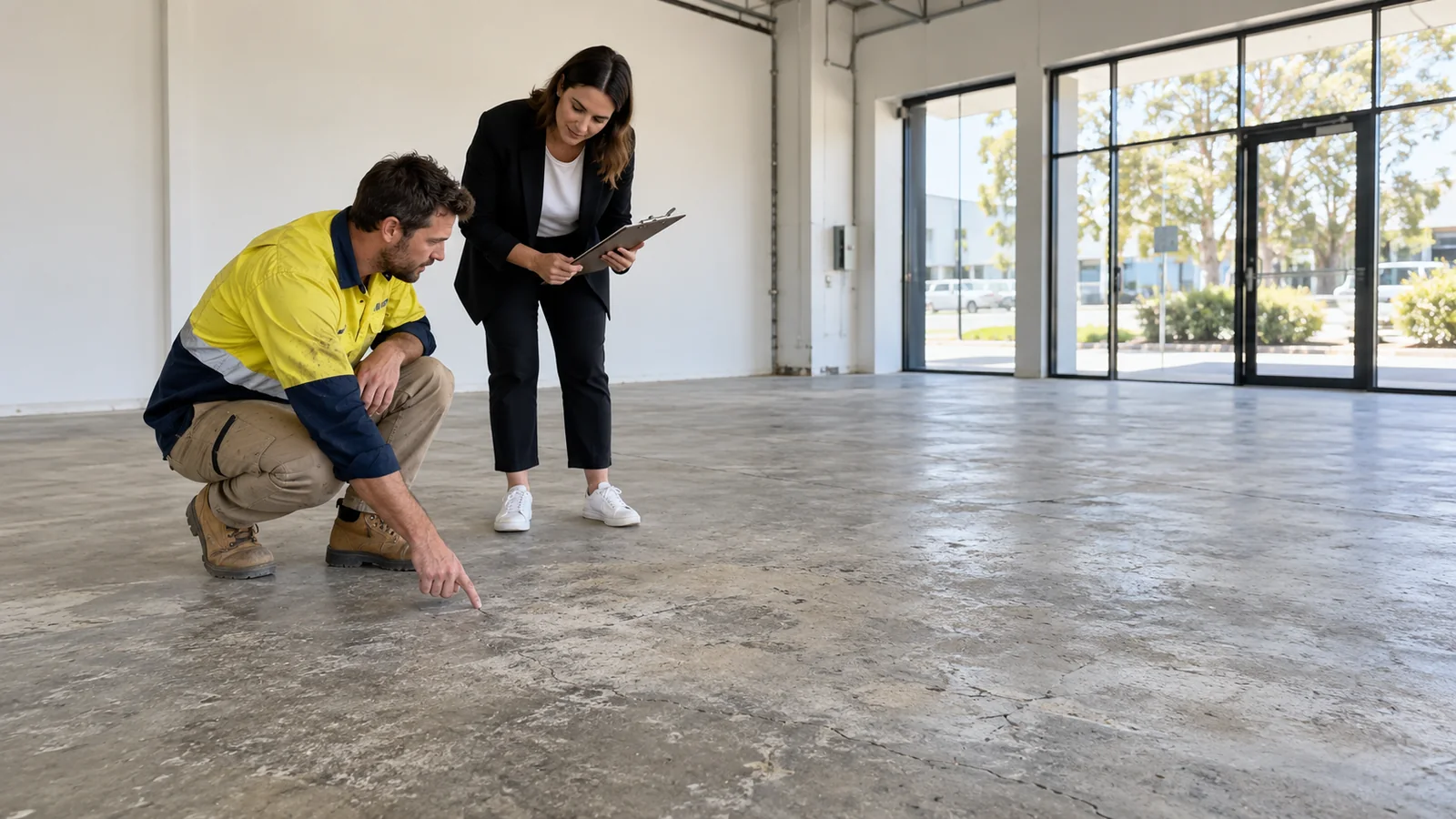
A resin coating can only perform as intended when the underlying concrete is suitable. Existing paint, sealers, oil contamination, weak surface material, moisture, cracks and uneven repairs can all affect the bond. A shiny top layer cannot correct a structural issue hiding underneath it.
A sound installation starts with inspection. Mechanical grinding may be used to remove unsuitable material and provide the appropriate concrete profile. Other preparation can involve cleaning contamination, identifying moisture concerns, discussing crack repairs and treating joints in a way that suits their purpose. Cement Concrete & Aggregates Australia's technical guides offer useful background on the behaviour and construction of concrete floors, including industrial slabs and joints.
This is also where two quotes that sound similar can differ substantially. One contractor may have allowed for substantial mechanical preparation and treatment of damaged areas; another may have priced mainly for coating. Always compare the preparation scope, not just the apparent price per square metre.
The installation needs to fit the business calendar
For an operating site, downtime is part of the real cost. Before work begins, a business should establish whether equipment must be moved, whether trades can access the whole floor, which areas must remain available and what the proposed return-to-use plan looks like. Curing is not the same as being dry to the touch. Light foot traffic, wheeled traffic and full operational loads may require different waiting periods depending on the specific system and conditions.
Larger areas may sometimes be planned in stages, although that depends on access, safe separation and the practical installation sequence. A staged plan is not automatically possible for every project. Temperature, humidity, substrate condition and the selected coating can also affect when another coat is applied and when an area is ready to reopen.
For builders and commercial property managers, it helps to discuss the programme before the slab is handed over. Flooring often comes late in the project, when trades, access and handover dates are already under pressure. Getting the requirements agreed early avoids forcing a careful installation into an unrealistic window.
What affects commercial epoxy flooring costs in Brisbane?
A square-metre rate can be a starting point, but it is not a complete commercial quote. The total area matters, yet a large clear floor can be simpler to prepare than a smaller, cluttered workshop. Previous coatings may need removing. Oil-stained concrete may require extra assessment. Repairs, moisture concerns, awkward access, floor texture, colour, line marking and performance requirements can all change the scope.
The useful way to compare quotations is to ask what each one includes. Is grinding allowed for? What happens if further damage is uncovered? Has the floor's intended use been documented? Are the coating layers and curing requirements explained? Does the plan consider access, cleaning and site handover? A transparent scope is generally more valuable than an attractive figure that leaves important work undefined.
An epoxy floor also needs sensible maintenance. Prompt spill management, compatible cleaning products and regular inspection can help preserve its finish. A durable coating is not a no-maintenance surface, and its service life cannot be predicted responsibly without knowing the traffic, environment and product specification.
Choose a contractor who asks the right questions
A credible commercial flooring contractor should want to know about the slab, equipment and daily operation before recommending the system. Look for a clear preparation process, honest explanations of likely limitations, relevant project examples and a realistic discussion of access and curing. If your site needs documented slip resistance, a particular chemical resistance or an engineered performance requirement, put that in the brief upfront.
For a buyer, a short site brief can save time: provide the suburb, approximate floor area, photos, existing floor condition, likely traffic, exposure to liquids or chemicals, desired finish and when the space needs to be returned to use. This gives the contractor something practical to assess instead of forcing a price out of incomplete information.
A local conversation with Conch Floor Coatings
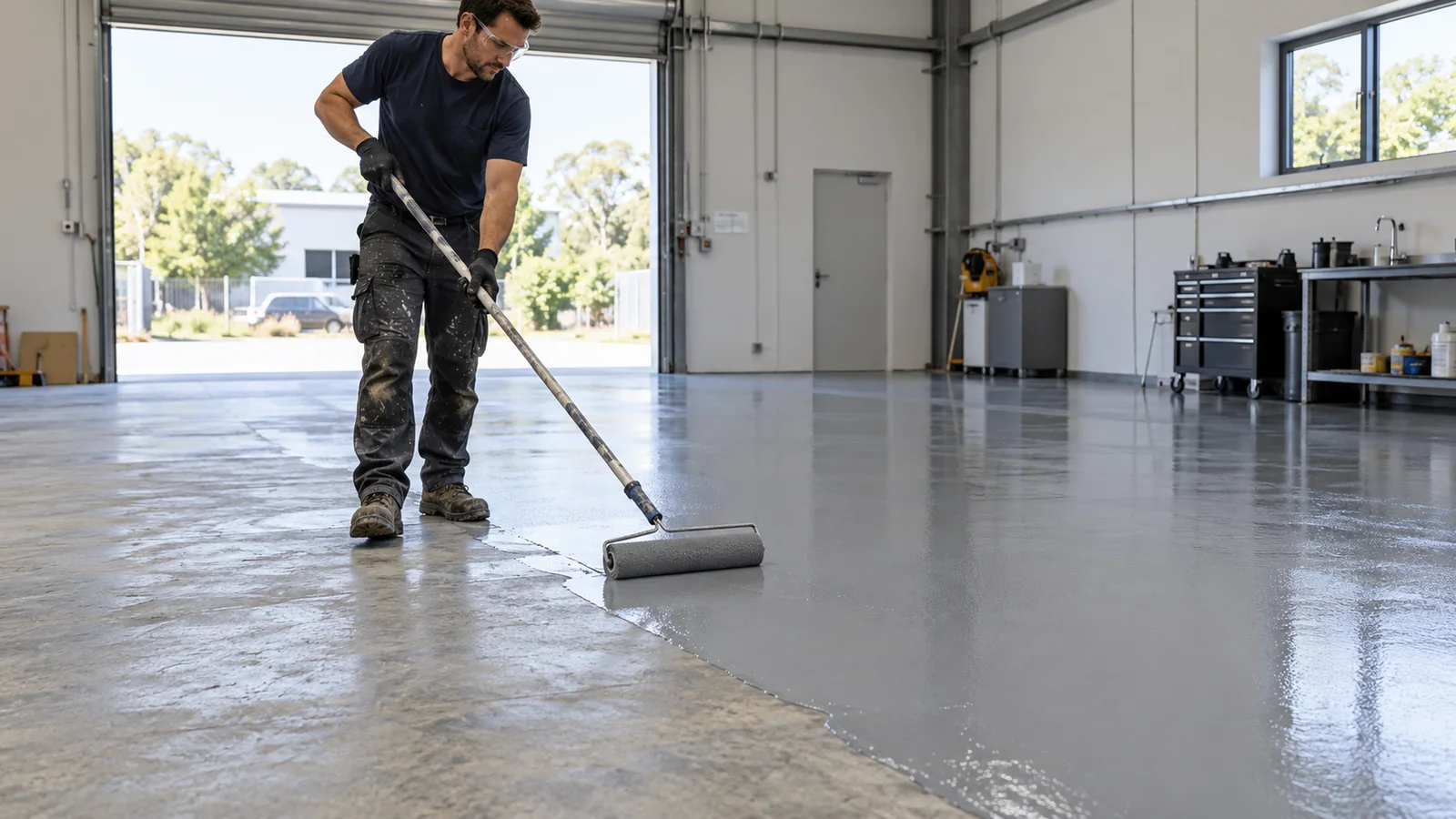
Conch Floor Coatings' commercial epoxy flooring service is based around assessing the actual site rather than selling the same finish for every business. Based in Algester and focused on Brisbane and its southern commercial areas, Conch Floor Coatings provides owner-led quoting and installation. You speak directly with Corey, the person doing the work, and the business states it does not use subcontractors.
For suitable larger commercial projects outside the immediate Brisbane area, including parts of South East Queensland, availability can be discussed on a project-by-project basis. The useful first step is to send the project details rather than assuming every location or site size is automatically covered.
A commercial floor should support the work happening above it. If you are planning a warehouse, workshop, showroom or other business-floor upgrade, start with the condition of the concrete and how the space operates. Then choose the finish that makes sense.
Frequently asked questions
How much does commercial epoxy flooring cost per square metre in Brisbane?
There is no reliable universal rate. The size and accessibility of the area, existing concrete condition, grinding, repairs, coating specification, slip requirements and installation schedule all affect cost. For a meaningful comparison, request an itemised scope rather than treating the cheapest square-metre price as equivalent to another system.
How long does commercial epoxy flooring last?
Its service life depends on product selection, surface preparation, traffic, cleaning, chemical exposure and ongoing maintenance. There is no credible single lifespan for every commercial floor. Ask what performance the proposed system is designed for and what maintenance the supplier recommends.
Is epoxy flooring suitable for a busy workshop or retail showroom?
It can be. A showroom may prioritise appearance and cleaning; a workshop may need resistance to traffic, oils and a suitable grip finish. The coating should be assessed against the actual use of the room, rather than described as suitable for every business by default.
Can epoxy be installed over an old painted or previously coated floor?
Sometimes a new coating can be installed after the existing surface has been assessed and properly prepared, but the old coating's condition and compatibility matter. Weak or incompatible coatings may need complete removal, and the concrete beneath must still be suitable.
Will an epoxy floor be slippery when wet?
Its slip performance depends on texture, contamination, footwear and cleaning. Anti-slip options may be suitable for higher-risk areas, but no coating removes the need to manage water, oil and other spills. Discuss any specified slip classification before choosing the finish.
Can the business remain open while the floor is being coated?
Possibly, if access and safe separation allow work to be staged. Some spaces need to be completely cleared. The plan must also protect uncured areas and allow the coating to reach the required return-to-use condition before foot or vehicle traffic resumes.
Does Conch take commercial flooring projects outside Brisbane?
Brisbane is the primary market. Conch considers suitable larger projects in surrounding South East Queensland areas by arrangement. Share the site location, approximate size and required timeframe so availability can be confirmed before a quote is prepared.